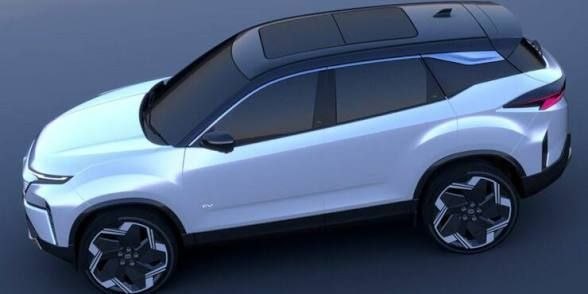
The Indian automotive market is evolving–rapidly. Not slowly, not in nuances, but in waves. And at the heart of this change is Tata Motors, a brand that has quietly made the transition to being a value-oriented carmaker into an earnest innovator.
With electric mobility to futuristic designs, Tata is not only keeping pace but leading the pack.
Today, with an eye toward 2026 and 2027, a new set is coming. Other models are evolutionary. Others? Radical. We shall take a look at five of the future Tata cars that will transform the Indian roads.
1. Tata Curvv EV – Coupe Meets Electric Confidence.
Tata Curvv EV can be considered the most expected product in Tata pipeline. It is daring, it is sculpted and it is no longer a typical SUV look that rules the Indian roads.
The first look makes it appear to be coupe-like, sporty, aerodynamic, and, no doubt, quality. However, behind that chic appearance is the sophisticated EV architecture of Tata.
Expected highlights:
Range of around 450–500 km
Fast charging capabilities
Slim, high technology interior, huge touchscreen display.
Advanced driver assistance systems (ADAS).
It is not an ordinary EV. It’s Tata indicating that electric cars do not have to be utilitarian, but can be emotional.
2. Tata Sierra EV The Legend Reborn, Redone.
The name Tata Sierra EV is a nostalgia to many Indian car enthusiasts. The first Sierra was legendary. It is returning now–but with an altogether contemporary identity.
The Sierra EV combines vintage inspiration with a futuristic implementation. Imagine big glass windows, a large lounge-like interior, and design that is both friendly and new.
What is exciting about it?
A probable two-motor AWD system.
The range is anticipated to be approximately 500 km.
Sustainable materials with ultra-premium interior.
Glass panoramic design to provide an airy feel.
It’s not just a comeback. It is a rediscovery–a rediscovery which might be attractive to older customers as well as a new generation of purchasers.
3. Tata Harrier EV – Power, Meets Sustainability.
The Tata Harrier EV has all the things that people adore about the Harrier: its presence on the road, muscular design, and commanding stance and gives it an electric heart.
The Harrier EV is based on the new Gen 2 EV platform of Tata and will provide serious performance and a long range.
Key expectations:
500+ km driving range
All-wheel-drive capability
Terrain response modes (yes, an EV also)
High-end interiors and comfort and technology.
It is not a mere city SUV. It is designed to suit the highways and rough roads alike. An electric beast, by your leave.
4. Tata Avinya -A glimpse into the future.
The Tata Avinya is the car that seems to represent tomorrow.
The Avinya isn’t a car as we know it, it is a vision unveiled as a concept. It is based on a specialized EV platform of Tata, emphasizes minimalism, sustainability, and the next-level user experience.
And frankly, it does not even attempt to appear like a classic automobile.
What sets it apart:
Lightning-fast fast-charging (so-called 500 km range within less than 30 minutes)
Dystopian interior design with near absence of actual buttons.
State-of-the-art AI-based personalized driving.
Unique design language with a strong emphasis on aerodynamics
The Avinya may not be implemented in the form of the concept, but one thing is definite- it will have an impact on all Tata EVs that will come after.
The company aims to launch a new small car offering a big impact in its market segment; Tata Punch EV Facelift / Next-Gen.
Small, efficient, and surprisingly powerful–the Tata Punch EV is already a trendsetter. But Tata isn’t stopping there.
A new or alternative generation is anticipated to be released in the 2026-2027 window, which would enhance the range, features, and general sophistication.
Expected upgrades:
Improved battery pack that has 300-400 km range.
Newer interiors with bigger infotainment system.
Improved safety features
More efficient motor to enhance performance.
To urban consumers, this may be their ideal first step towards electric mobility, affordable, reliable and style-wise.
The Bigger Picture: EV Strategy of Tata.
Take a step back and there is a pattern.
Tata isn’t just launching cars. It’s building an ecosystem.
The brand is targeting all segments with affordable EVs such as the Punch and high-end ones such as the Sierra and Harrier EV. On top of that, investments in charging infrastructure, battery technology, and software- and you start to realize the extent of ambition.
It’s not about one successful model. It is all about dominance in the long run.
Implications of This on Indian Buyers.
To the consumers, such a wave of impending releases offers a choice. Real choice.
Want something futuristic? Avinya.
Seeking retro with the new tech? Sierra EV.
Require an electric powered rugged SUV? Harrier EV.
Prefer something compact? Punch EV.
And in the event style is your thing, the Curvv EV could be just the thing.
The thing is–you can find something to suit.
Final Thoughts
Tata Motors may be defined by the years 2026 and 2027. Not only regarding sales, but also on how India will view electric mobility.
These upcoming cars aren’t incremental updates. They are a transition -a fearless, self-confident leap into the future.
Others will be a huge success. Others could be time consuming. Yet they both narrate a tale of change.
And should things play out the way, Tata will not merely be a part of the EV revolution.
It could also become its leader.